
When you unpack a new online order, flatten that delivery box, and place it by the recycling bin, you’re likely not thinking about global supply chains or commodity markets. You’re simply tidying up. But that ordinary box is about to begin a remarkable new chapter. It isn’t just “cardboard”—in recycling terms, it’s called OCC, or Old Corrugated Containers.
And OCC? It’s the star of the recycling world.
What Is OCC Exactly?
OCC is the technical name for used corrugated cardboard boxes—the sturdy kind with a wavy, fluted layer between two flat liners. This clever design provides strength without excess weight, making it ideal for shipping.
Think of the box that arrived at your door. Not the greasy pizza box or the thin cereal carton—those are different. OCC refers to the durable shipping containers we encounter daily.
Where Your Box Goes After the Bin
Once the recycling truck collects it, here’s what happens:
-
Collection & Sorting: Gathered from homes, stores, and factories, OCC is sorted by hand or with automated systems at recycling facilities.
-
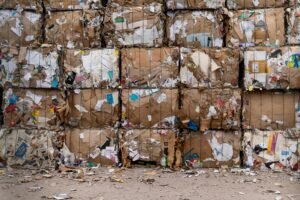
Baling & Shipping: Clean OCC is compressed into tight bales—traded as a commodity worldwide.
-
Pulping Process: At a paper mill, bales are mixed with water to create slurry, breaking the material down to fibers.
-
Cleaning & Refining: Contaminants like tape and staples are filtered out; ink may be removed.
-
Rebirth: The purified pulp is dried and pressed into new corrugated material. Your old box can become a new one in as little as two months.
Why This Matters
-
Highly Recycled: OCC boasts the highest recycling rate of any paper product in the U.S., often exceeding 90%.
-
Resource Saver: Recycling one ton saves about 17 trees, 7,000 gallons of water, and significant landfill space.
-
Energy Efficient: Using recycled OCC requires up to 50% less energy than virgin wood pulp.
-
Economic Value: This industry supports countless jobs in collection, processing, and manufacturing.
How to Recycle OCC Right
To help the process run smoothly:
DO:
-
Flatten boxes completely.
-
Remove plastic fillers, bubble wrap, and excess tape.
-
Keep material clean and dry.
DON’T:
-
Include greasy or food-stained boxes (like pizza boxes).
-
Leave plastic wrapping or ties on.
-
“Wishcycle” coated or waxy boxes—check local rules if unsure.
In Short
The next time you break down a box, remember: you’re supporting an efficient, eco-friendly cycle. OCC is the uncelebrated backbone of the circular economy, showing how everyday items can lead remarkable second lives. Keep flattening and recycling—your simple action contributes to a larger, greener system.